
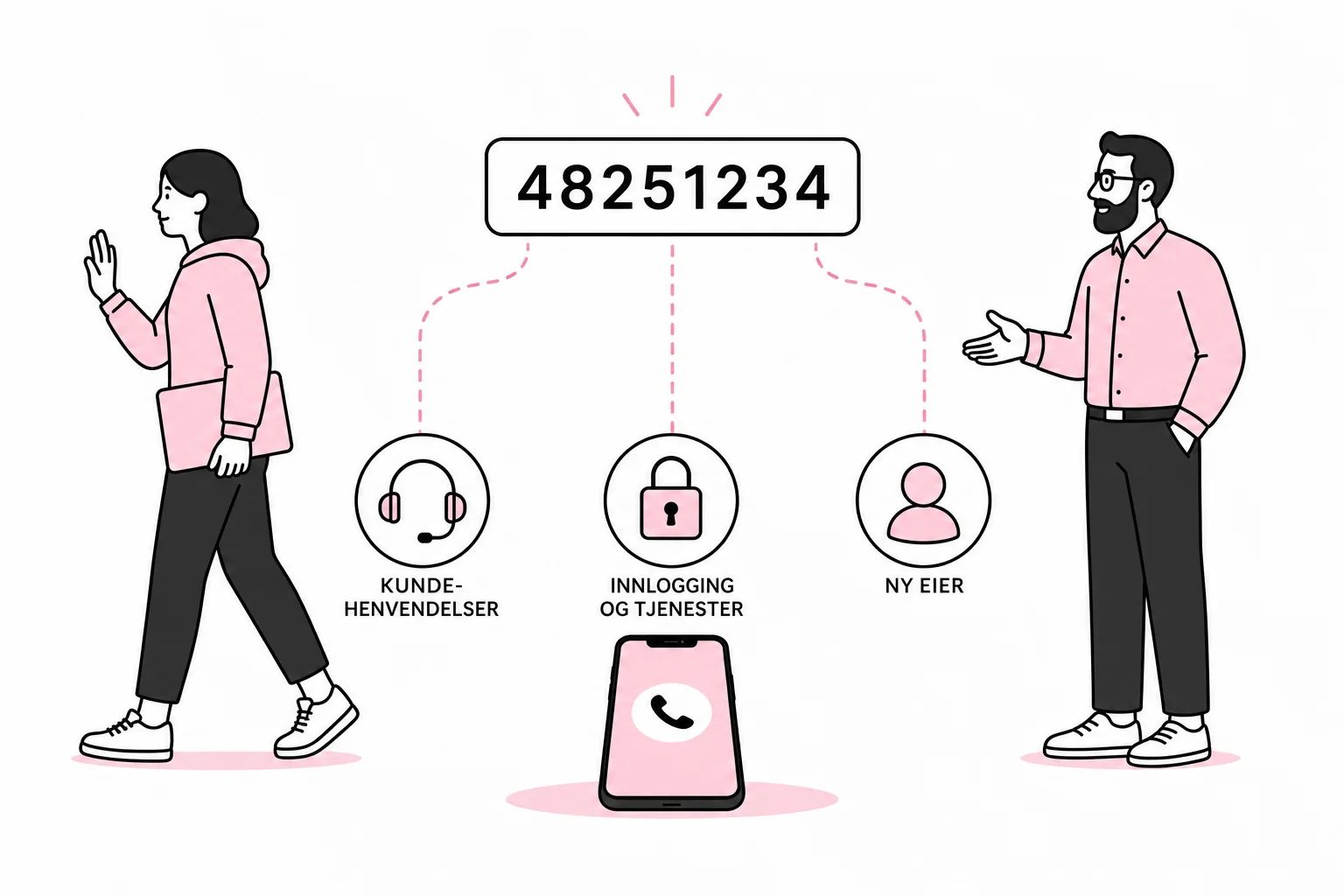
When an employee leaves, it is easy to collect the work phone, deactivate the email account and consider the matter closed. The mobile number is often left behind as eight seemingly innocent digits. The problem is that the number may be a customer channel, login key, contact point in advertisements and part of the employee’s private identity.
The short answer is that the company must first clarify who the number belongs to, then map what it is used for and finally choose whether to retain, forward or release it. This should happen before the last working day. Investigating the number’s role after the subscription has been terminated is rather like mapping the plumbing after the excavator has been through.
Start by clarifying who the number belongs to
It is not enough to know who pays the bill. You should also investigate how the number was created, whether it was originally private, what agreements exist and what was communicated when the employee began using it.
The company created the number
If the company ordered the subscription and the number has been used exclusively as a work number, the starting point is usually simple: The company retains the number. It can be forwarded to the switchboard, left unused during a transition period or later assigned to a new employee.
Even then, you should not automatically give the successor access to the entire phone contents. The number can be retained without old SMS messages, call logs, voicemails or messaging apps following along. A phone number and the former user’s communications are two different things, even though some systems treat them as a convenient package deal.
The employee brought a private number
If the employee moved their private number into the company’s mobile plan, you should have a written agreement covering what happens when they leave. In many cases, the most orderly solution is for the number to be returned to the employee, while the company establishes another contact channel for customers.
Do not assume that the account holder alone determines the matter if the documentation is unclear. The operator’s terms, consents and the specific agreement between the parties may be relevant. In the event of disagreement, HR, administration and, if necessary, legal counsel should be involved before the number is transferred or shut down.
No one knows how the number originated
This is the most common complicated scenario: The number has «always been there», the original agreement is gone, and the spreadsheet is named something like mobiloversikt_endelig_ny2. Map the history, talk to the employee and create a written solution. Ambiguity does not become more precise by sitting in a shared folder.
Map everything connected to the number
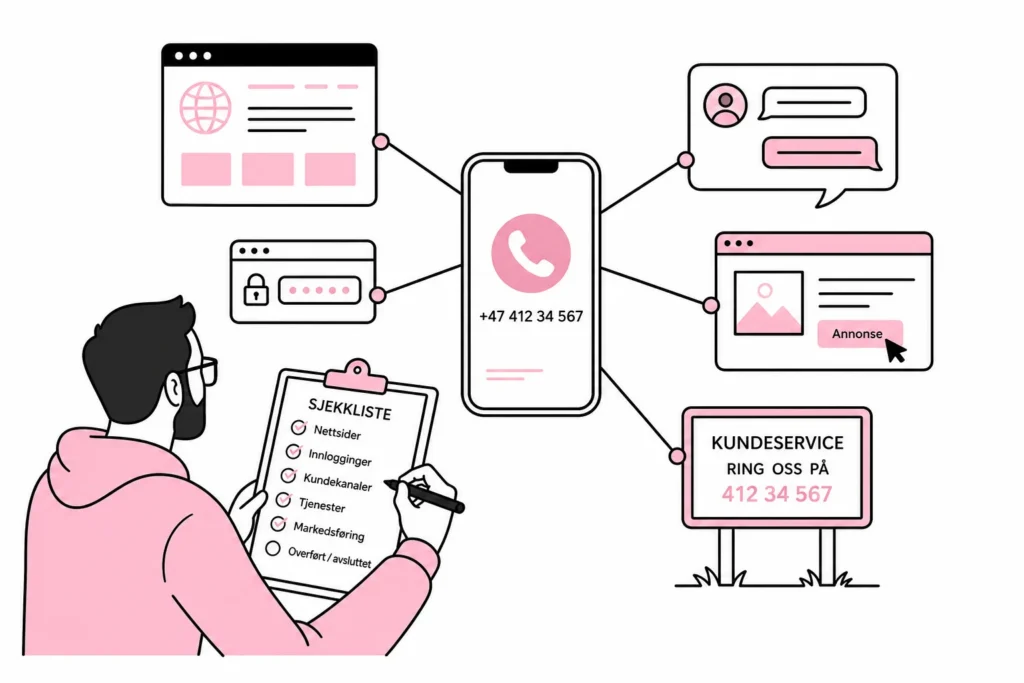
Before deciding the number’s future, you must find out where it is registered. This applies to both visible contact points and technical dependencies. The number may be published on the website, used for two-factor authentication or registered as a recovery method for an account no one has opened since the previous redesign.
Review the following points together with the employee and the system administrator:
- Customer contact: Do customers, suppliers or partners have the number as their primary means of contact?
- Website and directories: Does the number appear on contact pages, profile pages, campaign pages, business listings or digital advertisements?
- Login and recovery: Does the number receive one-time codes or notifications from critical systems?
- Messaging apps: Are work-related accounts directly linked to the phone number?
- Automated services: Is the number used for SMS alerts, on-call schedules, ordering systems or access control?
- Physical materials: Is the number printed on signs, vehicles, brochures, packaging or business cards?
- Internal directories: Does it appear in contact lists, emergency plans or notification procedures?
Be particularly thorough with two-factor authentication and account recovery. An old work number should not remain the key to the company’s systems after the employee has left. At the same time, you must avoid removing the number before a new and controlled authentication method has been tested. Security without testing is often just optimism with a checkbox.
Naturally, there are vendors that will try to sell you a «comprehensive offboarding platform» to move three phone numbers and send two emails. Some companies need advanced automation. Others need a named person responsible, a checklist and the willingness to actually use it.
Carry out the transfer in the right order
A safe transition is less about advanced technology than about sequence. If the subscription is shut down first and dependencies are mapped afterward, you may lose access to accounts or make it difficult for customers to reach the right person.
- Establish ownership and make a decision. Document whether the number will be retained by the company, returned to the employee or terminated.
- Appoint someone responsible. One person should coordinate the operator, IT, HR and immediate manager. «Everyone will follow up» often means that no one does.
- Move authentication. Replace the number as the recipient of security codes and recovery messages. Test that the new methods work before removing the old ones.
- Update contact points. Update the website, advertisements, directory listings, email signatures, internal overviews and other materials.
- Inform relevant contacts. Give customers and partners a clear new point of contact when necessary.
- Establish a transition solution. Use call forwarding or a neutral voicemail message if the business is keeping the number and expects incoming enquiries.
- Separate the number from its content. Do not transfer message history, voicemails or private data to a successor without a clear legal basis for processing and a genuine need.
- Set an end date. Decide when call forwarding should end and when the number may potentially be reused.
- Test from outside. Call and send a relevant test message from an external phone. Check that the enquiry reaches the right recipient.
A transition period should be long enough for active customers to discover the new way to get in touch, but should not continue indefinitely. Its duration must be assessed based on the role, customer journey and how publicly the number has been used. A sales number printed on materials will often require more follow-up than an internal number.
Protect both the business and the former employee
If the business keeps the number, new messages may be intended personally for the former employee. Whoever takes over the enquiries should have clear instructions on how to handle such messages. Avoid replying as though the sender were still communicating with the same person.
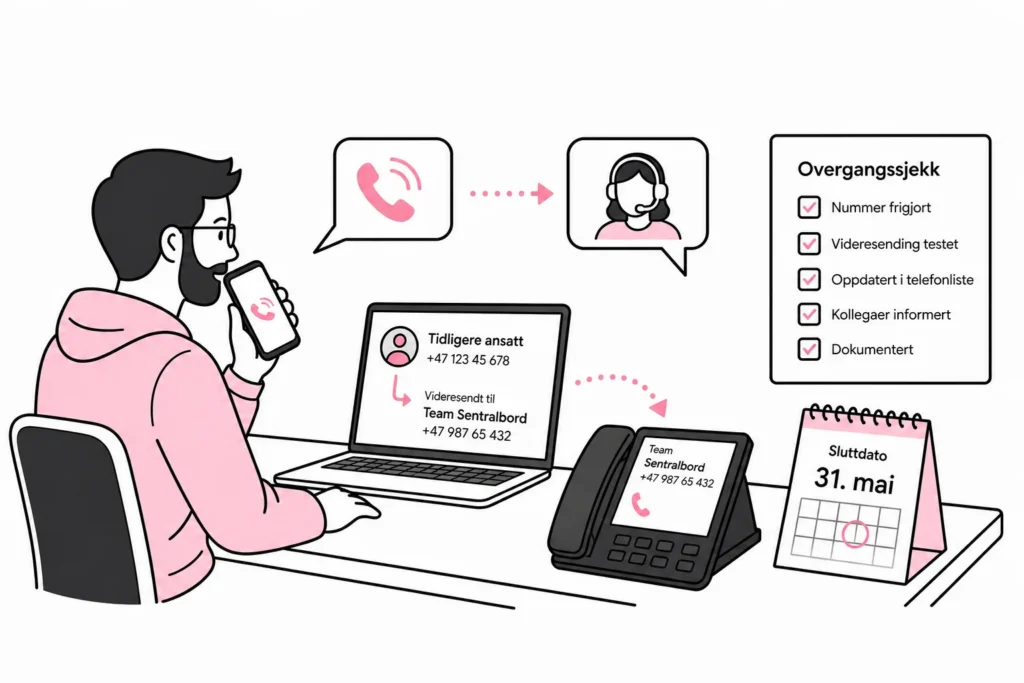
A voicemail message could, for example, state that the person no longer works for the organisation and provide a new main number or point of contact. Keep the message short. A voicemail does not need a brand platform, a soundscape and a strategic narrator’s voice to say “press one”.
If the number is returned to the employee, it must be removed from the business’s accounts and public-facing channels before the transfer is completed. Otherwise, the business’s security codes, customer enquiries or operational alerts could end up with a former employee. That is unfortunate for both parties, even when the relationship ends on good terms.
Create a standard rule before the next departure
The best solution is to clarify what happens to the mobile number when the subscription is set up, not when someone hands in their access card. The policy should clearly distinguish between company-created work numbers, private numbers included in the company agreement, and roles where the number serves as a shared customer channel.
A simple internal rule should at least describe:
- Who owns or controls the number during the employment relationship.
- Whether the employee may take the number with them when they leave.
- Who approves porting, call forwarding or termination.
- How authentication and account recovery should be transferred.
- How private and work-related data should be separated.
- How long a transition solution should last.
- When the number may be assigned to a new employee.
Include the mobile number in the company’s standard employee offboarding process. The process should have specific owners and deadlines, not just an item called “IT will sort out the phone”. That wording has about the same level of precision as “someone will take care of the website”.
Finally, you should check the result from the outside: Find the number as a customer would, call it and check who answers. This test takes only a few minutes and often reveals more than a lengthy status meeting. The mobile number has only been properly dealt with when customers, systems and security codes actually point in the right direction.