
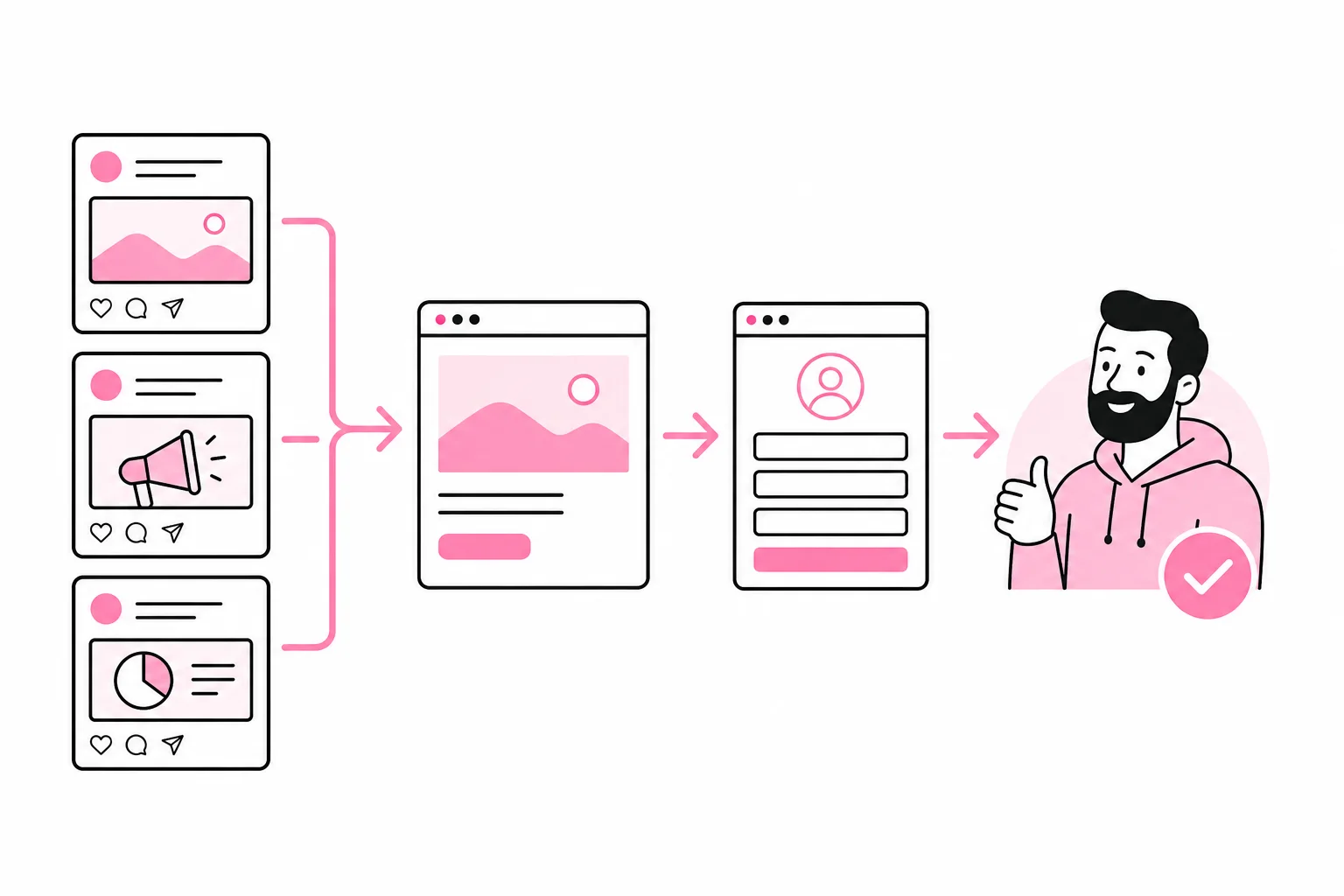
Social media can create awareness, build trust and move potential customers further along to your website. The challenge arises when management asks what the activity has actually delivered. It is rarely enough to show reach, video views and a post that received an unusually high number of thumbs-up reactions.
Likes are nice, but as a measurement method they are like applause from the hallway: You hear that something is happening without knowing whether anyone came into the shop. To assess business value, activity must be connected to concrete actions such as enquiries, registrations, quote requests or qualified sales opportunities.
The question is therefore not only how much traffic social media sends, but what kind of traffic arrives, what people do on the website, and whether any of them become relevant customers. This requires a simple measurement chain from post to CRM—not a dashboard with 47 metrics that looks like an aircraft cockpit mounted on a wheelbarrow.
Define what a lead means before you start measuring
A lead is not one universal action. For a consultancy, it might be a specific project enquiry. For a course provider, it could be a registration, while a supplier with a long sales process might register a download of a professional guide as an early signal.
Start by distinguishing between micro-conversions and main conversions. A micro-conversion shows interest but is not necessarily a sales opportunity. A main conversion is more closely linked to revenue or dialogue with the sales department.
- Micro-conversions: A visit to an important product page, a download, a newsletter registration or a play of a professional video.
- Main conversions: A submitted contact form, a booked meeting, a quote request, a trial order or a qualified phone enquiry.
- Sales-qualified lead: An enquiry that fits the target audience, reflects a genuine need and can be followed up commercially.
Ideally, choose one or two main conversions per campaign. If everything from a three-second video clip to a signed agreement is called a conversion, the reporting becomes impressive and about as illuminating as fog.
Build a trackable chain from post to CRM
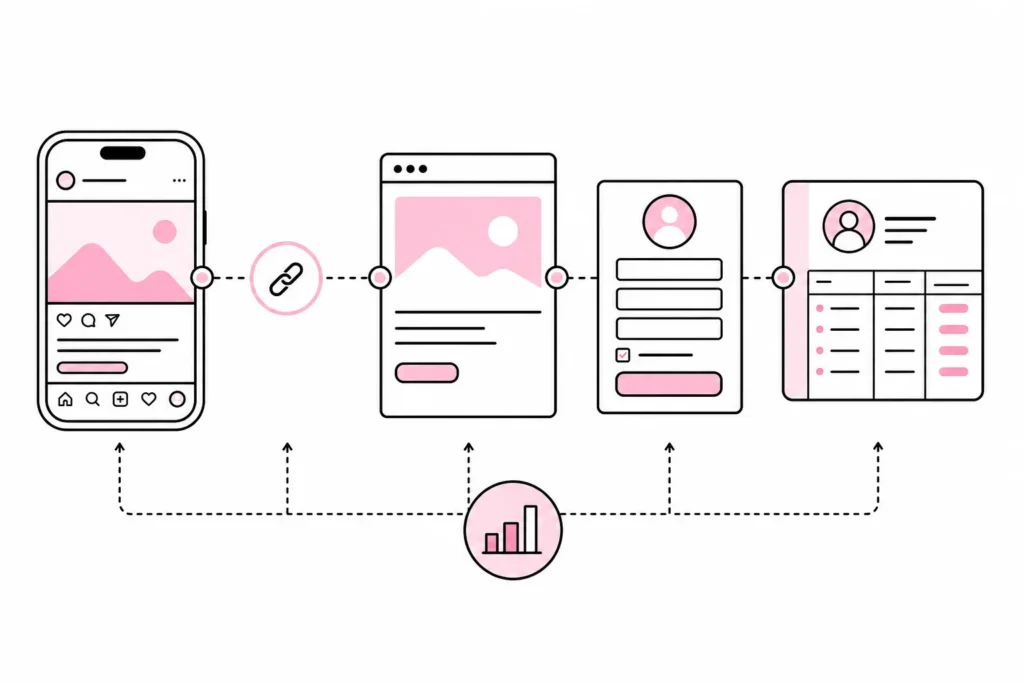
Good measurement consists of several links that need to work together: the publication in the social channel, the link, the landing page, the conversion point and the registration with sales. An error in one link can make the rest of the report misleading.
Tag links consistently
Use campaign parameters on links from both organic and paid posts. At a minimum, they should describe the source, channel type and campaign. A practical naming standard might use linkedin as the source, organic_social as the channel type and productname_launch as the campaign.
Decide on the naming convention in advance. If one person writes linkedin, another LinkedIn and a third li, the analytics tool may treat them as different sources. You need a short naming standard, not a cross-functional committee that spends three meetings deciding on a hyphen.
- Use lowercase letters and the same separators every time.
- Clearly distinguish between organic and paid traffic.
- Give campaigns names that will still make sense six months from now.
- Avoid personal names and other unnecessary personal information in the parameters.
- Document the standard where the people publishing can actually find it.
Send traffic to a relevant landing page
A post about one specific service should not send users to the homepage and hope they find their way. The landing page must continue the same message, explain the offer and provide a clear next action. The connection between the post and the page affects both the conversion rate and how reliably you can assess the content.
The form should collect what sales actually needs to assess the enquiry, but nothing more. A form with twelve required fields may be useful if the goal is to reduce the number of leads to a manageable zero. For many businesses, name, contact details, organisation and a brief description of the need are enough.
Pass campaign data on to CRM
When a visitor submits a form, relevant campaign data should follow the registration onward. This allows sales to see which channel and campaign contributed to the enquiry. It makes it possible to distinguish between many weak leads and fewer high-value enquiries.
Test the entire chain with a test enquiry before publishing. Check that the correct campaign is recorded, that the form comes through, that notifications work and that the record is created correctly in CRM. A “magic” tracking plugin can automate a great deal, but it has not yet developed the ability to read the company’s intentions through the server room’s aura.
Do not expect one metric to explain the entire customer journey
A person may discover the company through a post, visit the website later via an organic search and eventually submit a form directly. The analytics tool may then credit the last recorded channel, even though social media started the process.
This is an attribution problem. First touch shows what introduced the company. Last touch shows what happened immediately before the conversion. Both can be useful, but they answer different questions.
Therefore, use several signals in your assessment:

- Campaign-tagged visits and recorded conversions.
- The first and last known traffic source in the analytics tool or CRM.
- The lead’s quality and subsequent progress through the sales process.
- An optional form field with the question “How did you hear about us?”
- Changes in direct traffic, brand searches and enquiries while the campaign is running.
The self-reported question is particularly useful because traffic sources can disappear when people switch apps, devices or browsers. The answers will not be perfect, but they can reveal influence that technical tracking does not capture.
At the same time, be mindful of privacy. Campaign parameters normally do not need to contain information about individuals. Analytics tools, cookies, advertising pixels and data sharing may, however, require consent and clear information, depending on how the solution is set up. Clarify the setup with the person responsible for privacy, and collect only the data you actually need.
Report on quality, cost and the next decision
A good report should help you decide what to do next. It does not need to reproduce every figure the platform offers. Channels tend to produce enough charts on their own; more colours do not equal more insight.
A monthly report can be structured around the following questions:
- How many relevant visits came from each channel and campaign?
- How many micro- and primary conversions were recorded?
- How many leads did sales assess as qualified?
- What did the campaign cost per qualified lead when media spend and production were included?
- Which messages, formats and landing pages produced the best quality?
- What should be continued, changed or stopped?
Also look at the relationship between volume and quality. Ten enquiries from one post may be weaker than two enquiries from another if those two are a better fit for the target audience. Therefore, connect marketing data to status in the sales process, without waiting until all deals have been fully processed before learning anything.
Test one significant variable at a time, such as messaging, target audience, format or landing page. If you change everything at once, you will not know what affected the result. It is less spectacular than a “full-funnel growth sprint”, but far easier to understand afterwards.
The goal is not perfect attribution. It is a measurement chain that is reliable enough to compare efforts, detect errors and make better priorities. Define the lead, tag the links, test the conversion, transfer data to the CRM and assess quality together with sales. Then social media becomes something more than activity—and the report something more than a weather forecast with green arrows.