
eSIM seems like a modest change: The mobile subscription moves from a small plastic chip to a digital profile in the phone. For the business, however, it can affect the entire process, from ordering and provisioning to support, travel and device replacement. The good news is that you can stop searching for a SIM ejector tool in the drawer. The bad news is that the SIM ejector tool was often the simplest part of the process.
The specific question is therefore not whether eSIM is newer than a physical SIM, but whether the technology makes administration easier in your organisation. The answer depends particularly on the number of phones, the operator’s business solution, the device fleet and how the IT department handles setup and lost devices.
What is eSIM, and what does it change in practice?
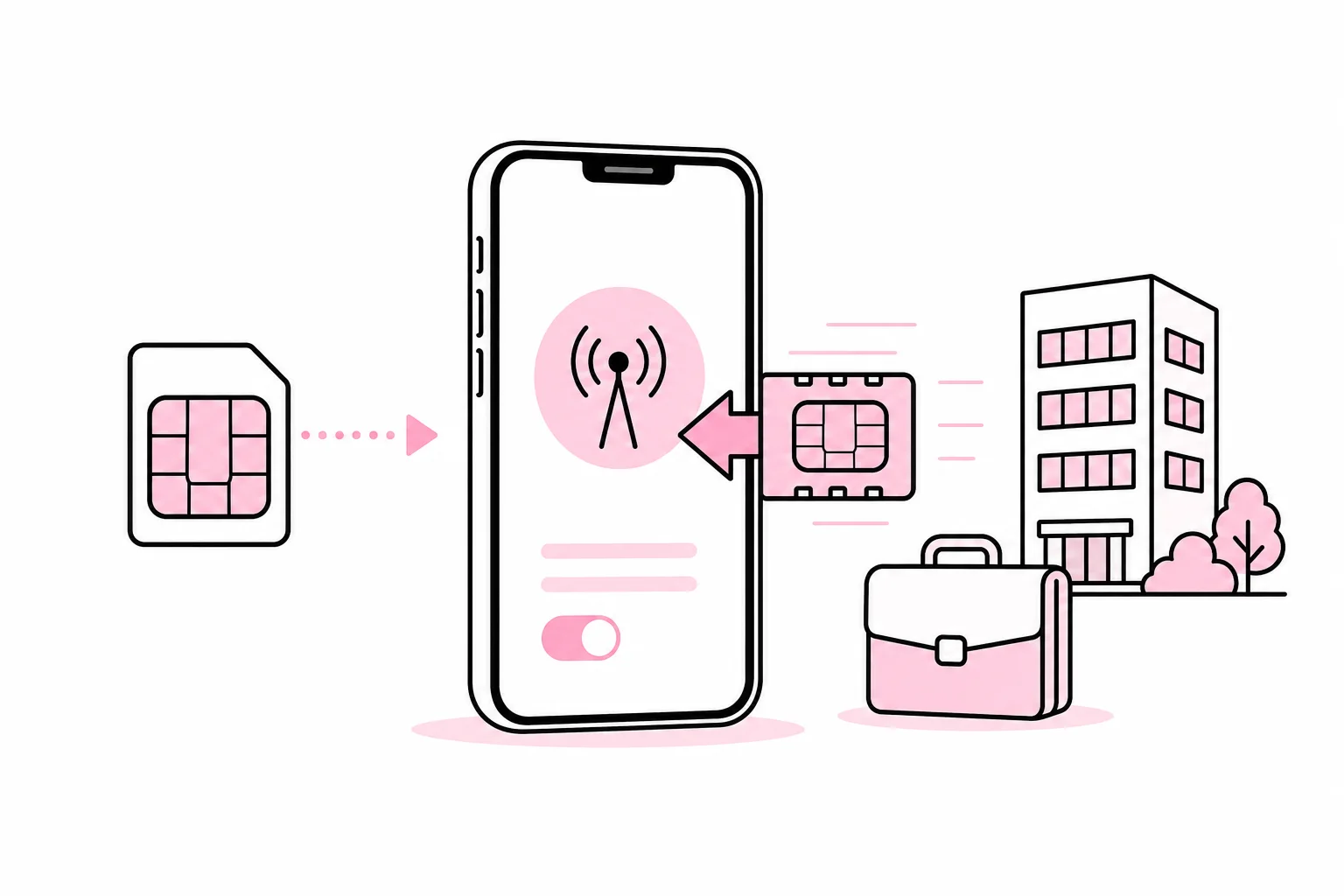
An eSIM is a built-in component that can store one or more operator profiles. The profile contains the information the phone needs to connect to the mobile subscription. It can be activated using, among other things, a QR code, an operator solution or central device management, depending on the phone, operator and subscription type.
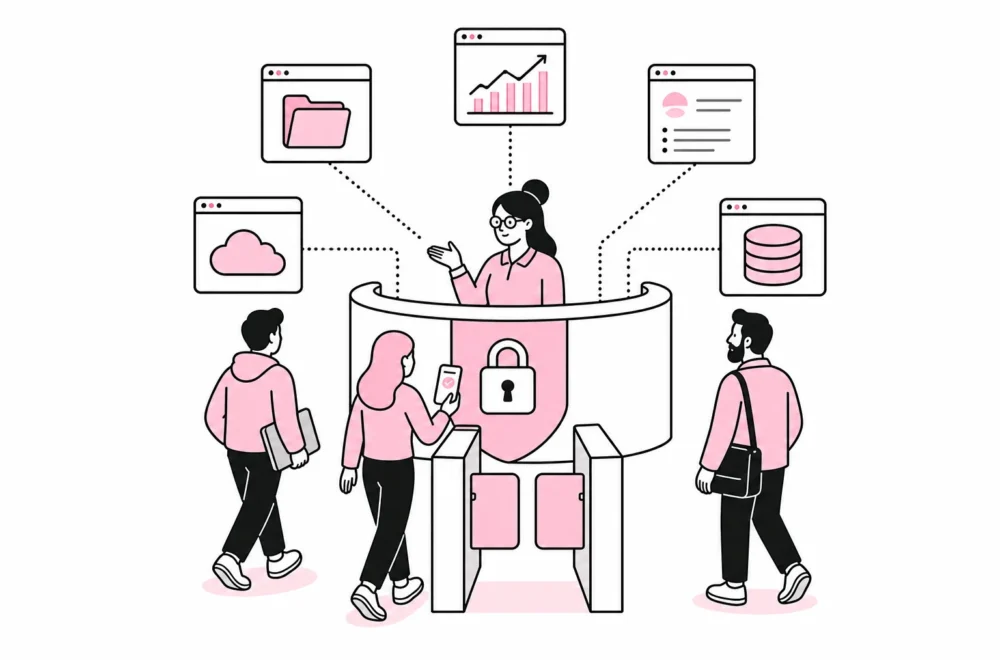
It is important to distinguish between the phone, the eSIM profile and the mobile subscription. They are three separate components. Deleting the profile does not normally terminate the subscription, and suspending the subscription does not delete the company’s data from the phone. Think of the eSIM profile as an access card stored in the device: If you deactivate the card, the office is still full of documents. Suspending the subscription and securing or wiping the phone must therefore be two separate actions.
With a physical SIM, someone must receive the card, register who is to have it and install it in the correct phone. With eSIM, several of these steps can become digital. This can reduce logistics, particularly when employees work in different locations. But “completely touchless deployment” still often means that someone interacts with the operator portal, the device register and a spreadsheet named Final_new_version_4.
When does eSIM provide clear value for the business?
Many phones need to be provisioned or replaced
eSIM is most interesting when the organisation handles a certain volume. If IT regularly sets up new phones, replaces damaged devices or moves subscriptions, digital activation can save practical effort. The benefit is greatest when the operator supports an orderly business process and the phone models can be managed consistently.
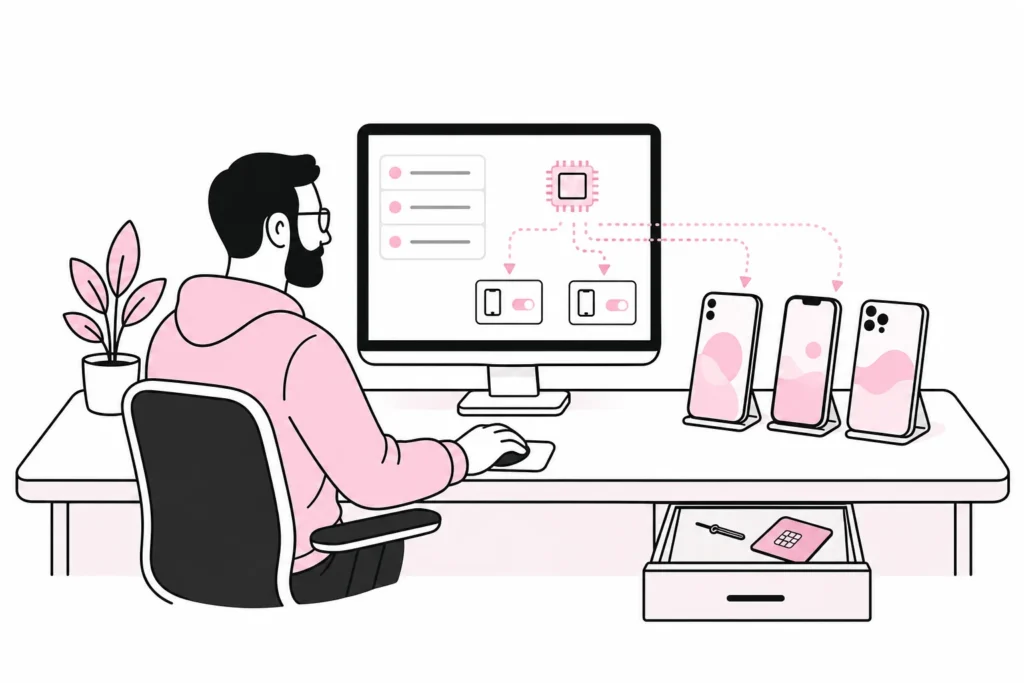
Central device management, often called MDM, can in some setups be used to distribute or manage mobile subscriptions. The options vary between operating systems, operators and management solutions. Do not purchase a “magical lifecycle platform” until the supplier has shown exactly how a new phone actually gets its subscription. Animated arrows in a presentation have so far activated surprisingly few mobiles.
Employees use work and personal numbers on the same phone
Many modern phones can use multiple SIM profiles, such as a physical SIM and an eSIM or two eSIM profiles. This makes it possible to have a work number and a personal number on the same device. The employee can usually choose which number is used for calls, messages and mobile data.
This can be practical, but it requires clear rules. The business should clarify who owns the phone, what data can be managed, what happens when employment ends and who pays for data usage. Also give the lines clear names. “Work” and “Personal” are better than “Primary” and “Secondary”, two labels that seem designed to turn a simple phone call into a minor identity crisis.
Employees travel and need local data packages
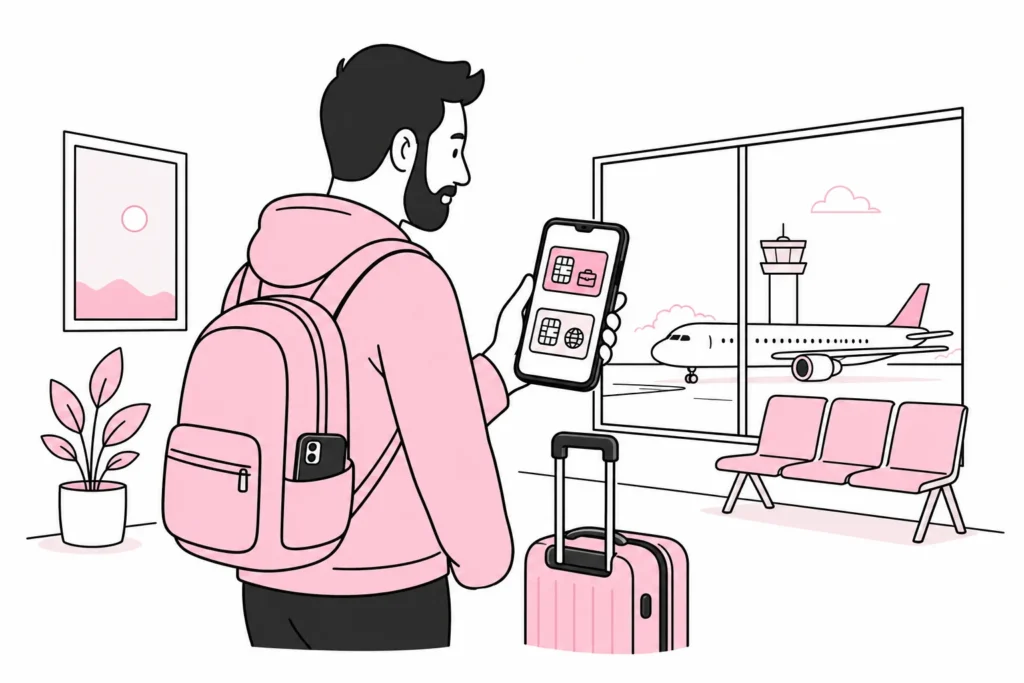
eSIM can make it easier to add a separate data package while travelling without removing the company’s regular SIM. This can reduce costs and preserve access to the work number. Before recommending this, check whether the phone can keep the relevant lines active simultaneously, and how calls, messages and data are routed.
Create a short travel procedure explaining which line should be used for data, whether data roaming should be enabled and how the employee can prevent the work subscription from taking over when the travel package runs out. Phone menus are not always consistent, and a switch with a friendly name can still produce a less friendly bill.
When is a physical SIM still the simplest choice?
eSIM is not automatically better. If the business has few phones, infrequent replacements and a stable process for physical SIM cards, the benefit may be limited. The same applies if the device fleet consists of models with different or no eSIM support.
A physical SIM can also be simpler when a subscription needs to be moved quickly to a backup phone. The card can be removed and inserted into a compatible device without the operator having to issue or transfer a profile. With eSIM, moving it may require access to the operator portal, new activation or assistance from customer service. The process varies, so it should be tested before a manager is standing at the airport with a shattered screen and eleven per cent battery.
Pay particular attention to these factors:
- Device support: Check the specific phone models, not just the manufacturer’s name.
- Operator support: Business subscriptions may have different activation processes from personal subscriptions.
- Backup phones: Clarify how a number is moved when the regular phone is lost or damaged.
- BYOD: Decide who can install, remove and manage the work profile on a personally owned phone.
- Activation without a connection: Downloading an eSIM profile normally requires internet access, so have a plan for the initial setup.
How to introduce eSIM without creating a new support discipline
Start with a limited pilot, not a full migration. Choose employees with representative phone models and work patterns. Test new activation, phone replacement, device loss, international travel and subscription termination. A pilot should uncover friction, not merely confirm that the project plan had attractive colours.
- Map the devices. Record the model, operating system, ownership and support for eSIM and multiple active lines.
- Ask the operator to demonstrate the process. Test both first-time activation and moving to a backup phone. Clarify whether QR codes are single-use, how long they remain valid and who can order new ones.
- Protect the activation information. An activation code should be treated as access information, not placed in an open chat or shared document.
- Assign responsibility. Determine who orders subscriptions, approves costs, administers phones and blocks services.
- Document the sequence of events. In the event of loss, you must be able to block the subscription while simultaneously locking or erasing the company's data through the available administration tools.
- Create a short user guide. Show how the employee selects the correct line for calls and data, and who to contact if problems arise.
Do not regard eSIM as a security measure on its own. It cannot be physically removed from the phone, but the account with the operator and the procedures for identity verification remain important. Attacks that attempt to move a number to another device are handled primarily through sound operator processes and strict control over who can make changes.
SMS codes should not be the only protection for particularly important systems when better alternatives are available. Use passkeys, security keys or a suitable authentication app where the risk warrants it. The mobile number is useful, but it should not serve as the username, key and backup administrator all at once.
A simple decision for most businesses
Choose eSIM when you have many or geographically dispersed employees, frequent phone replacements, a need for work and personal numbers on the same device, or an operator that offers a documented and testable administration process. Keep physical SIM where compatibility is inconsistent, backup phones need to be put into use immediately, or digital activation requires more manual work than the plastic card it replaces.
The best solution may also be a combination. Standardize on eSIM for supported work phones, but keep some compatible backup phones and a clear emergency procedure. The goal is not to eliminate plastic at any cost. The goal is for an employee to get working mobile access quickly, without three departments having to launch a “fast track” with six approvals.